 Expertspost
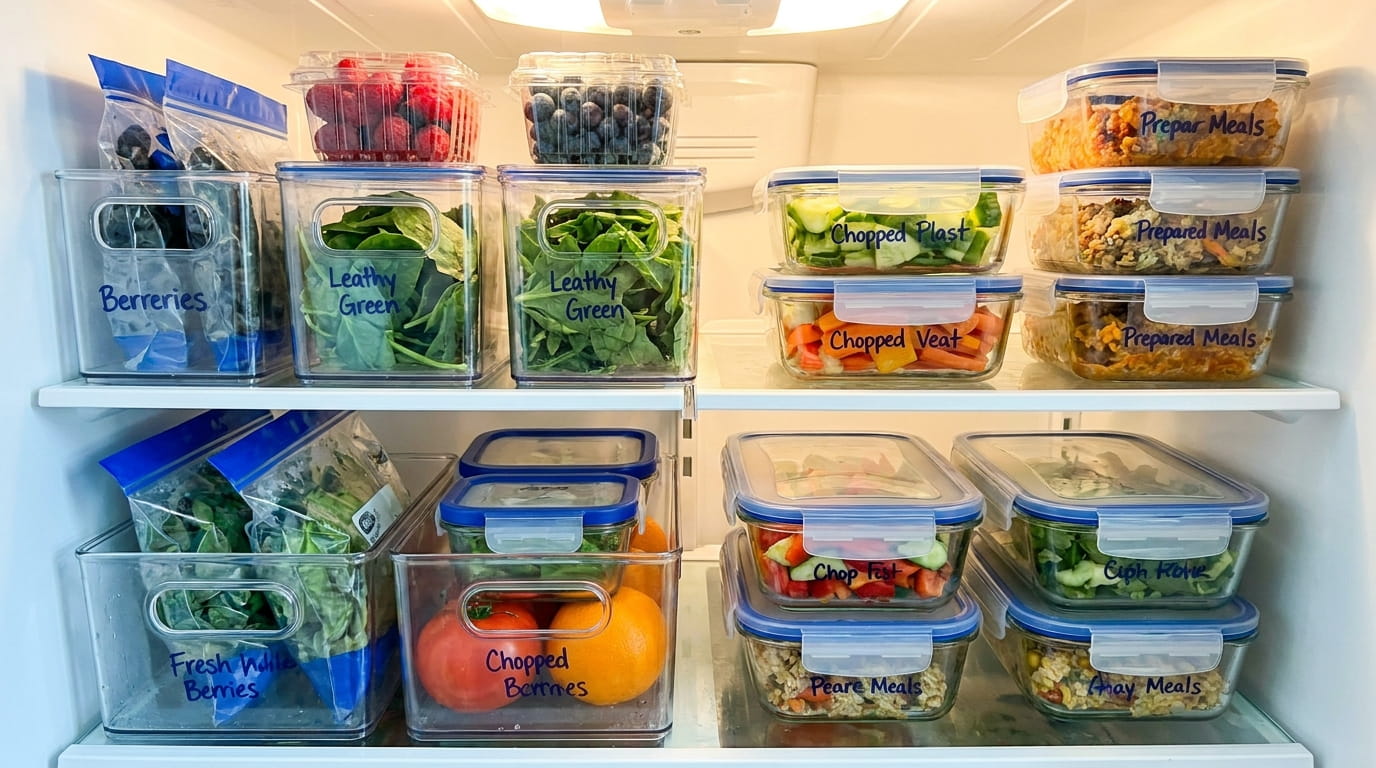
A disorganized fridge is a machine for forgetting food. Produce gets shoved wherever it fits, leftovers vanish into opaque tubs, and the back of the middle shelf becomes the place good intentions go to liquefy. The fix is not an app or buying less; it is organizing around two facts — different spots in a fridge are different temperatures, and you only eat what you can see.
Why food rots before you eat it
Start with the setting nobody checks: the actual temperature. The FDA recommends keeping the refrigerator at or below 40°F and the freezer at 0°F, and points out that at room temperature, the bacteria behind foodborne illness can double in number every 20 minutes. Few fridge dials show real temperatures, so a freestanding appliance thermometer — a few dollars — is the only way to know. A fridge quietly running at 45°F explains a lot of premature slime, and nudging it colder buys days on everything perishable.
While the thermometer settles, check two mechanical details. The door gaskets should grip a slip of paper firmly when the door closes on it; a gasket that lets the paper slide is leaking cold air and money. And resist packing the fridge solid — chilled air has to circulate to keep temperatures even, so a fridge stuffed to the walls develops warm pockets exactly where the forgotten food hides. The freezer is the opposite: it runs most efficiently full.
The second mechanism is simpler: anything pushed out of sight stops existing in your mind. "Out of sight" becomes "discovered as a science experiment three weeks later." Both problems — temperature and visibility — have layout solutions, which is the rest of this article.
The zones that matter
A fridge is not one even temperature, so store food where its zone suits it.
- Door: the warmest zone, swinging warmer with every opening. Condiments, jams, and juice only — not milk, and not eggs, despite the egg molds built into older doors.
- Top shelf: steady temperature; leftovers, drinks, ready-to-eat food, and the "eat-me-first" bin described below.
- Middle shelf: dairy, eggs, milk — colder and far steadier than the door.
- Bottom shelf: typically the coldest spot. Raw meat and fish live here, on a tray so nothing drips onto food below. This one is genuine food safety, not tidiness: drip contamination from raw meat is a classic way kitchens make people sick.
- Drawers: produce, split by humidity if the drawers have sliders — high humidity for leafy greens, low for fruit.
If you adopt only one zone rule, make it raw-meat-to-the-bottom. The rest improve freshness; that one prevents illness. Once the zones exist, restocking becomes mechanical: groceries land in their zones in two minutes, new items go behind older ones of the same kind so the oldest gets used first, and nothing needs deciding twice.
Containers and the eat-me bin
Clear containers change behavior more than any other purchase. Leftovers in opaque tubs vanish; in clear glass, they get seen and eaten. Pair them with a deadline: the USDA's guidance on leftovers is three to four days in the fridge, refrigerated within two hours of cooking, after which the freezer or the bin makes the call. A strip of masking tape with a date settles every "how old is this" debate before it starts. Use shallow containers rather than deep ones for anything cooked — they cool food through to a safe temperature far faster, which is the point of the two-hour rule in the first place.
The single highest-value move is a labeled "eat me first" bin on the top shelf. Anything approaching its deadline — half an onion, opened deli meat, the last two yogurts — goes in, and meals start with a look in that bin before anything else gets opened. It is a stupidly simple idea that outperforms every gadget in the organizing aisle. A lazy-Susan turntable for jars and a shallow pull-out bin for cheese and deli goods attack the same enemy: things hiding behind other things.
| Food | Fridge life (per FoodSafety.gov) |
|---|---|
| Cooked leftovers | 3-4 days |
| Raw poultry | 1-2 days |
| Raw beef, pork, lamb (roasts, steaks, chops) | 3-5 days |
| Opened deli meat | 3-5 days |
| Fresh eggs in shell | 3-5 weeks |
Making produce last
Produce is the biggest waste category in most households, and a few specifics do real work. The EPA's food-storage guidance puts wilting-prone vegetables — leafy greens, carrots, cucumbers, broccoli — in the high-humidity drawer, with most fruit in the low-humidity one. Greens last longest washed, dried thoroughly, and stored with a paper towel in the container to absorb moisture. Herbs keep for a couple of weeks standing in a glass of water like a bouquet. Berries should stay unwashed until eaten, since surface moisture accelerates mold.
Some things do not belong in the fridge at all: tomatoes go mealy in the cold; whole onions, garlic, and potatoes want a cool dark cupboard — with the onions and potatoes stored apart, since together they spoil each other faster. And use the freezer as a pause button, which the EPA explicitly recommends for bread, sliced fruit, and leftovers that will not be eaten in time: label with contents and date, and overripe bananas become banana bread instead of fruit-fly bait. Herbs that will not be finished fresh freeze well chopped into an ice-cube tray with olive oil, and even a half-can of tomato paste keeps for months frozen in spoonfuls on parchment.
The weekly habit that ties it together
Organization decays without one small ritual, and the structure only makes the drift slower and the recovery faster. The ritual: a five-minute pass the night before grocery day. Pull everything questionable to the front, discard what is truly gone, check the cold storage chart when you are unsure, and take stock so the shopping list fills real gaps instead of buying a third jar of mustard. Planning even one meal around the eat-me bin before shopping closes the loop.
The stakes are bigger than one household's grocery bill — the USDA estimates 30-40 percent of the U.S. food supply goes to waste, and consumer-level waste is a large share of it. But the household math is motivation enough: a family throwing out a few dollars of spoiled food per week is paying a triple-digit annual fee for disorganization, and the layout above eliminates most of it without changing what anyone eats. A fridge organized by temperature, visible by default, with a forgiving little bin for the about-to-turn, wastes a fraction of what a chaotic one does. The same one-in-one-out discipline that keeps a small kitchen sane applies here too — more in our small-space storage guide.
Frequently asked questions
What temperature should a refrigerator be set to?
At or below 40°F, with the freezer at 0°F, per FDA guidance. Many fridges run warmer than their dial suggests, so a cheap appliance thermometer is worth keeping inside — at room temperature, the bacteria that cause foodborne illness can double every 20 minutes, and every degree above 40°F shortens the life of everything on the shelves.
How long do leftovers last in the fridge?
Three to four days, according to the USDA and FoodSafety.gov's cold storage chart. After that, freeze or discard. Refrigerate leftovers within two hours of cooking (one hour if the food has been sitting in temperatures above 90°F), in shallow containers so they cool through quickly.
Should milk and eggs go in the refrigerator door?
No. The door is the warmest zone in the fridge and swings warmer every time it opens, so it suits condiments, juice, and other sturdy items. Keep milk and eggs on an interior shelf where the temperature is steady — despite the egg-shaped molds built into many older door liners.
Why does raw meat belong on the bottom shelf?
Two reasons: the bottom shelf is typically the coldest spot in the cabinet, and gravity. Raw meat and poultry juices dripping onto ready-to-eat food below is a classic cross-contamination route. Store raw meat in a tray or container on the lowest shelf so nothing can drip past it.
Sources & further reading
- Refrigerator Thermometers: Cold Facts about Food Safety — U.S. Food and Drug Administration
- Cold Food Storage Chart — FoodSafety.gov
- Leftovers and Food Safety — USDA Food Safety and Inspection Service
- Preventing Wasted Food at Home — U.S. Environmental Protection Agency
- Food Waste FAQs — U.S. Department of Agriculture