 Expertspost
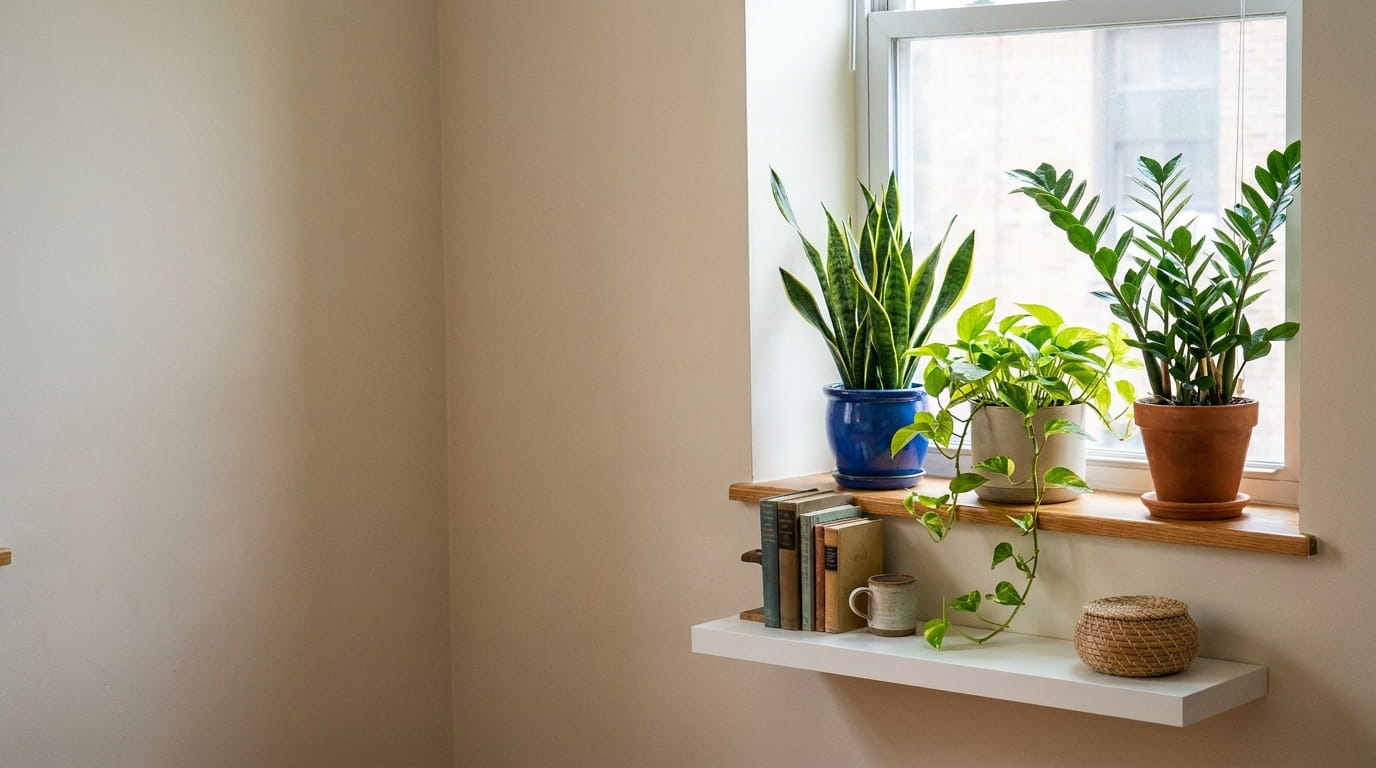
Frequent travelers tend to assume their plants die of thirst. Usually it is the opposite. The plants that thrive in a sometimes-empty home are the ones built to be ignored — and the care routine that keeps them alive is mostly the discipline of doing less. Here are seven proven survivors, what the horticulture extension services actually recommend, and the handful of tricks that cover a two-week absence.
What actually kills houseplants
Overwatering kills more houseplants than neglect. The University of Maryland Extension notes that a large percentage of houseplants are lost to incorrect watering, and explicitly advises against watering on a schedule: test the soil with a finger to a depth of about two inches, and water only if it is dry. A thirsty plant droops and recovers; a waterlogged one rots at the roots silently and is often dead before it looks sick. For a traveler, this is good news — the failure mode you are most prone to is the one these plants are built to survive.
The supporting cast matters too. Every pot needs a drainage hole; if you fall for a beautiful pot without one, drop a plastic nursery pot inside and lift it out to water. And never let a pot stand in a saucer of water for days — that is just overwatering from below.
The other quiet killer is wrong light, which makes a plant limp along for months, leggy and pale, while you blame your watering. We get to honest light assessment below.
The seven survivors
Each of these tolerates ten-plus days alone, and several appear on Penn State Extension's list of plants that handle low light. Light categories follow the University of Minnesota Extension's definitions, explained in the next section.
| Plant | Light it tolerates | Water when | Pet-safe? |
|---|---|---|---|
| Snake plant | Low to bright | Soil fully dry; every 2-3 weeks | No — keep from nibblers |
| ZZ plant | Low to medium | Every 2-3 weeks | No |
| Pothos | Low to bright indirect | Droops when thirsty; about weekly | No |
| Spider plant | Medium to bright | Top inch dry; about weekly | Yes |
| Cast iron plant | Low | Top two inches dry | Yes |
| Succulents and cacti | Bright direct only | Deeply but rarely | Varies by species |
| Heartleaf philodendron | Low to medium | Droops when thirsty; about weekly | No |
The snake plant and ZZ plant are the champions of the list because both store water — the snake plant in its thick leaves, the ZZ in underground rhizomes — and both would honestly prefer that you forget about them. Pothos and heartleaf philodendron are the communicators: they droop theatrically when thirsty and perk up within hours of a drink, which makes them ideal training plants. The spider plant and cast iron plant are the two safe bets for pet households, and succulents are the one entry with a hard requirement: real, direct sun. In a dim apartment they stretch, pale, and sulk.
Care beyond water and light is minimal for all seven. Repot only when roots circle the pot or push out the drainage hole, typically every two or three years, into a container one size up. Feed sparingly — a diluted houseplant fertilizer a few times during spring and summer growth, nothing in winter — and wipe dust off the big-leaved ones occasionally so the leaves can actually photosynthesize. Overfeeding burns roots faster than underfeeding starves them, which makes neglect, once again, the safer error.
Buy the plant that wants to be left alone, then have the discipline to actually leave it alone.
Keeping them alive while you travel
For a week away, the plants above need nothing beyond a good watering the morning you leave and a step back from any blazing window so they transpire less.
For two weeks or more, two cheap tricks cover the gap. First, group the plants together away from direct sun — clustered plants raise the local humidity and dry out more slowly. Second, give the thirstier ones a reservoir: terracotta watering spikes cost a few dollars each, and self-watering pots with a base reservoir will carry a pothos through a fortnight without drama. Skip the elaborate string-wicking setups; their failure modes are a soaked floor or a dry wick, and you will not be home to notice either. The snake plant, ZZ, and cast iron plant need none of this — for them, the kindest preparation is a normal watering and a closed door. Past three weeks, even the survivors appreciate a human: a neighbor watering once in the middle of a month-long absence covers everything on the list.
Reading your light honestly
People consistently overestimate how bright their homes are. The University of Minnesota Extension classifies indoor light into three working levels: low light, the range suitable for a north-facing window or a fairly dark corner; medium, typical of east-facing windows or spots near a west window; and high, the bright zones at south- or southwest-facing windows. Its lists match this article's table — snake plant and pothos for low light, spider plant for medium, succulents for high.
A practical shortcut: at midday, hold your hand a foot above where the plant will sit. A sharp, crisp shadow means bright light; a soft fuzzy shadow means medium; barely any shadow means low. And remember that "tolerates low light" is not "prefers no light." A snake plant survives a dim corner but grows toward the window, and a plant leaning hard in one direction is voting for more light — give it some, or rotate the pot a quarter turn weekly so it grows evenly.
Plants to skip if you are gone a lot
Some plants are gorgeous and will punish an empty apartment. Calatheas demand steady humidity and fussy watering. Ferns crisp up over a long weekend. Fiddle-leaf figs drop leaves at any change in routine. Most flowering houseplants need consistent moisture a traveler cannot promise. None are bad plants; they are the wrong plants for a packed suitcase by the door.
Pet owners should run any candidate past the ASPCA's toxic and non-toxic plant database before buying — it covers over a thousand species, and several plants on our survivor list, including pothos, ZZ, and snake plant, can make a cat or dog sick if chewed. High shelves solve the problem for casual nibblers (and pair nicely with the vertical thinking in our small-space storage guide); committed chewers deserve a fully non-toxic lineup.
One last freebie: pothos and spider plants both produce offshoots that root in a glass of water on the windowsill, which is how two plants quietly become a dozen. Propagating survivors is cheaper than nursing divas — match the plant to your actual life, and you stop coming home to a graveyard.
Frequently asked questions
How often should you water a snake plant?
Only when the soil is dry an inch or two down — typically every two to three weeks indoors, and less often in winter when growth slows. Snake plants store water in their thick leaves and tolerate drought far better than soggy soil, which rots their roots. When in doubt, wait another week.
Do houseplants need to be watered on a schedule?
No, and a fixed schedule is a common way to overwater. The University of Maryland Extension advises watering when the plant needs it, not by the calendar: test the soil with a finger to a depth of about two inches and water only if it is dry. Light, temperature, pot size, and season all change how fast soil dries out.
Which tough houseplants are safe for cats and dogs?
Spider plants and cast iron plants are listed as non-toxic to cats and dogs in the ASPCA's plant database. Pothos, ZZ plants, and snake plants can cause vomiting and irritation if chewed, so keep them on high shelves or skip them in a household with a persistent nibbler. Check any new plant against the ASPCA list before buying.
Can a houseplant survive two weeks without water?
The drought-storers — snake plant, ZZ plant, cast iron plant, and most succulents — handle two weeks easily if watered well before you leave and moved out of direct sun. Thirstier plants like pothos and spider plants usually survive but droop; a self-watering pot with a full reservoir or a terracotta watering spike bridges the gap.
Sources & further reading
- Watering Indoor Plants — University of Maryland Extension
- Lighting for Indoor Plants and Starting Seeds — University of Minnesota Extension
- Low-Light Houseplants — Penn State Extension
- Toxic and Non-Toxic Plants — ASPCA