 Expertspost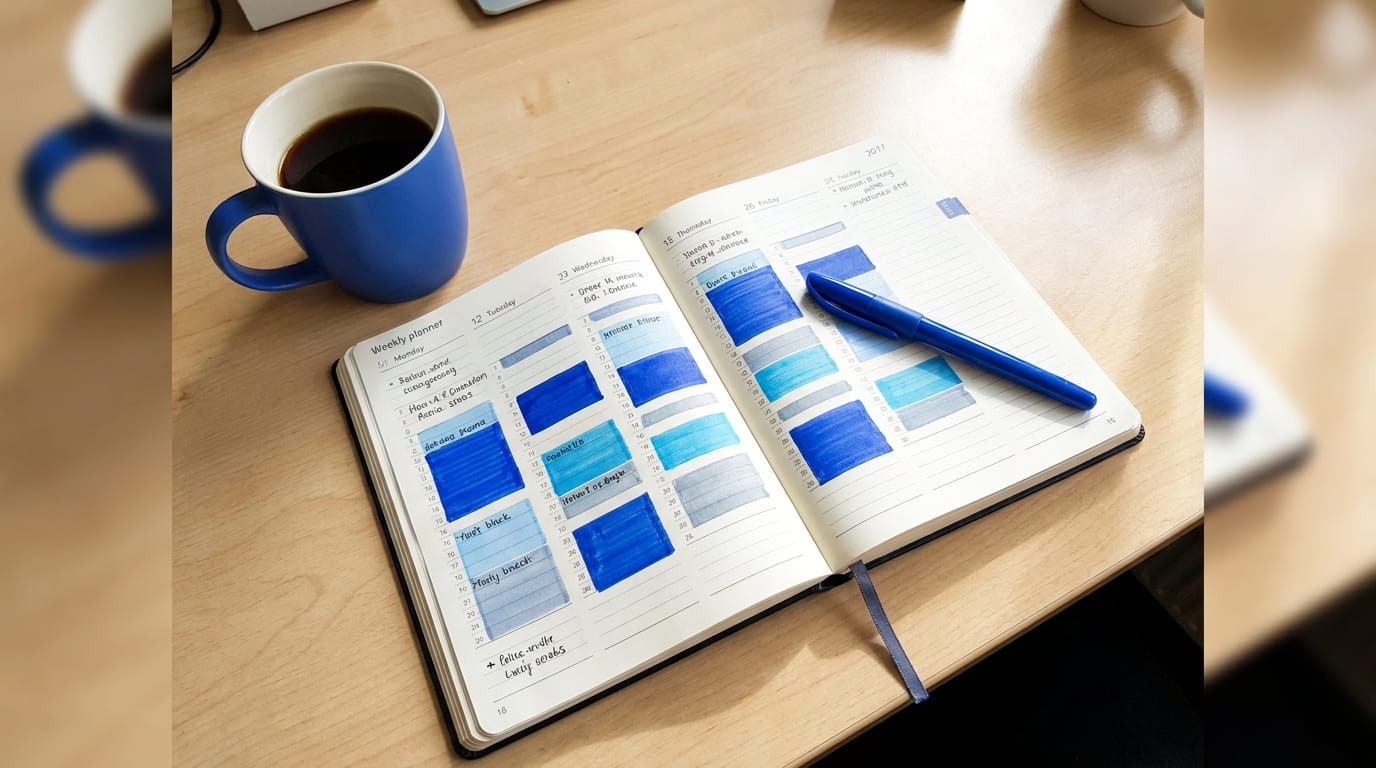
Time-blocking that actually survives a real workday
Why most time-blocking collapses by Tuesday, and the looser version that survives real workdays.
Realistic ways to get more done without burning out: focus, planning, note-taking, and the small routines that hold up on a busy week.
Why most time-blocking collapses by Tuesday, and the looser version that survives real workdays.
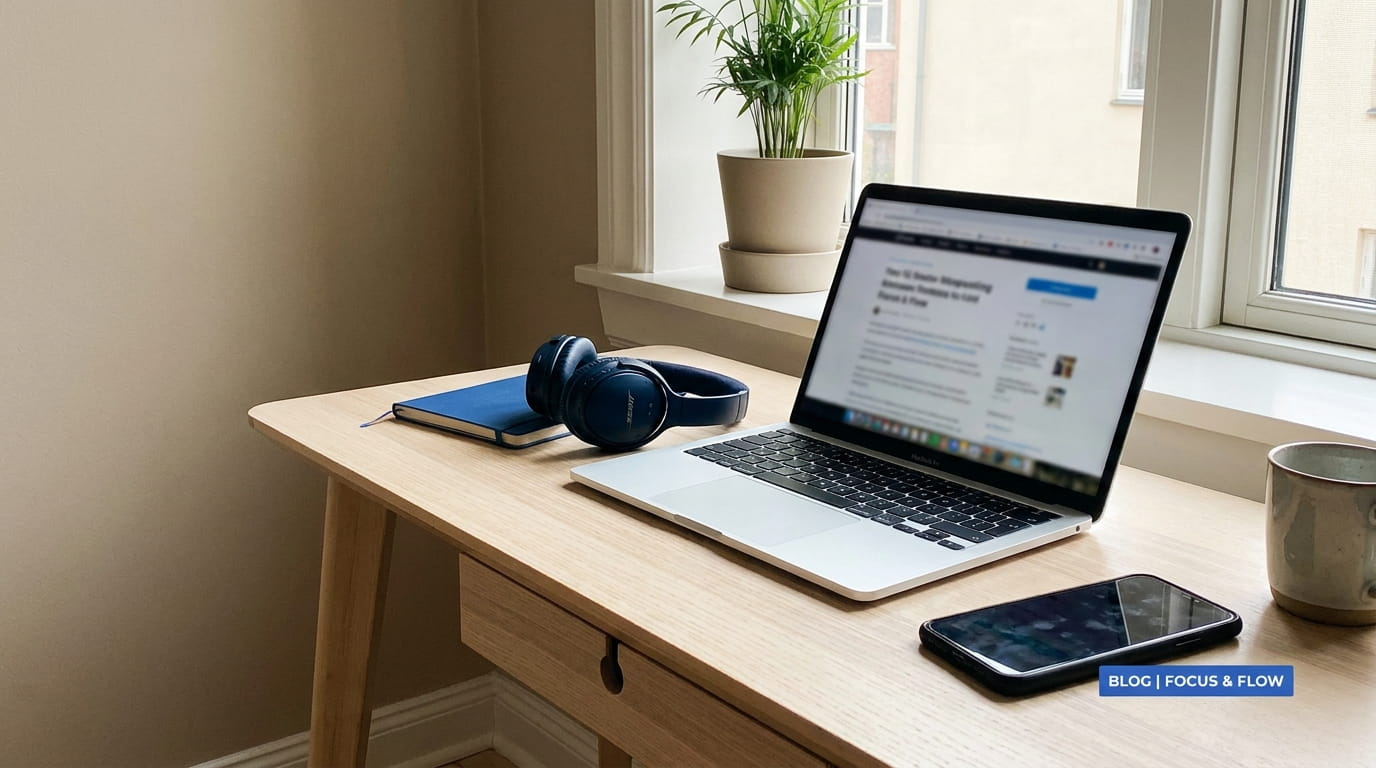
How to reliably get one hour of real focus — including what to do with your phone.
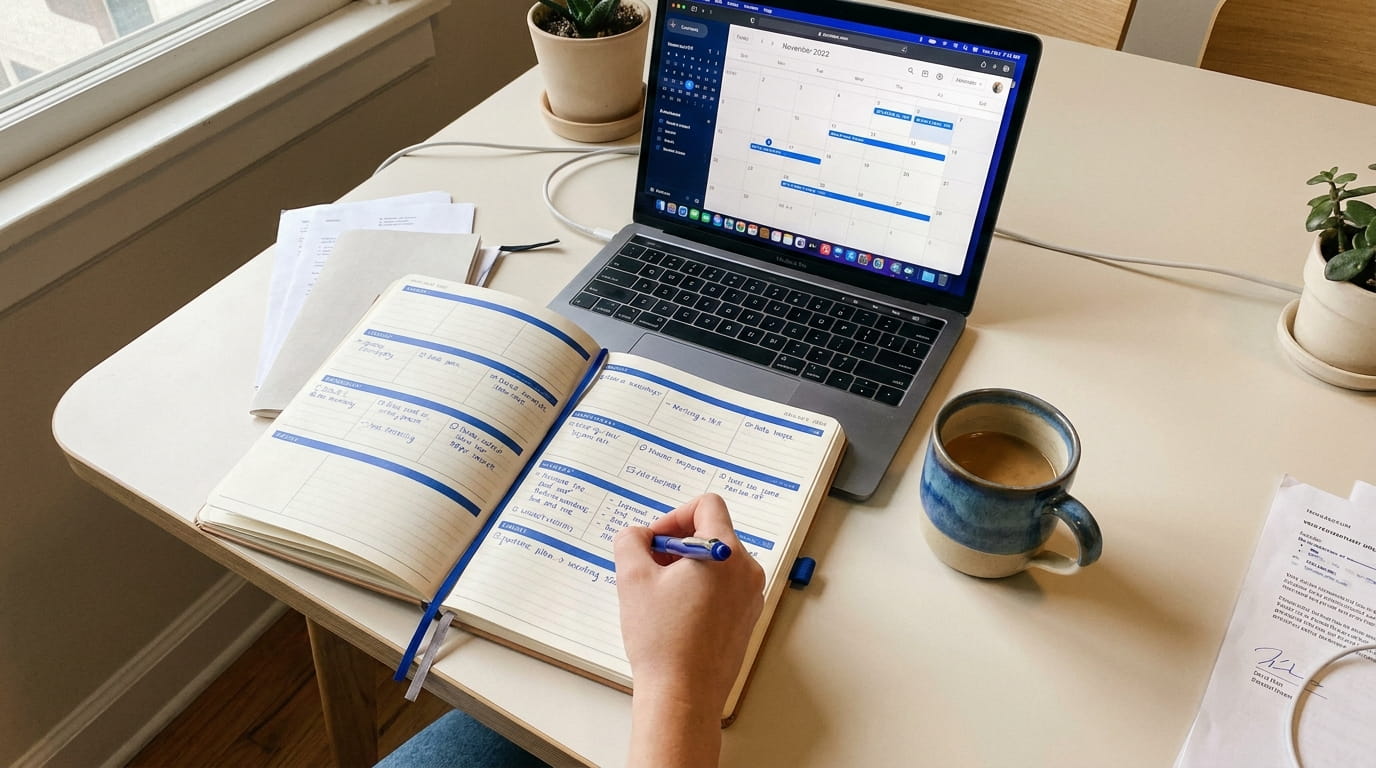
The 20-minute weekly habit that keeps the rest of the system honest.

What research actually supports against procrastination, and the popular advice that doesn't hold up.
Productivity writing has a credibility problem: most of it sells a system, and the system always seems to work best for the person selling it. This section takes a more skeptical line. The guides here favor small, boring routines over grand frameworks, and where a technique is recommended, it's because published research — on attention, interruptions, and habit formation — supports it, not because it photographs well.
The section covers three layers. Planning: time-blocking that survives a real workday and the weekly review that keeps a task system from rotting. Attention: getting one genuine hour of deep work, taming the inbox, and what actually helps against procrastination. Boundaries: saying no at work — including to the meetings that don't need you — and a note-taking system simple enough to stick with.
One honest caveat applies to everything here: no routine fixes a workload problem. If your calendar is impossible, the boundaries guides matter more than the planning ones. Sources — interruption-cost research, meeting-load data, studies on implementation intentions — are linked at the end of each piece.
Multitasking feels productive and tests badly. Here is what task-switching actually costs, why your attention keeps leaking, and a realistic way to do one thing at a time without pretending the world will leave you alone.
Most time-blocked calendars look beautiful on Sunday evening and collapse by Tuesday. Here is a looser, evidence-informed version of time-blocking built to survive meetings, interruptions, and ordinary human inconsistency.
Inbox Zero makes many people miserable. The evidence points somewhere simpler: check email on a schedule, keep the structure minimal, and cut the volume coming in.
Elaborate second-brain setups get abandoned at a remarkable rate, and the research on note-taking methods is messier than the productivity industry admits. A minimal system — one place, fast capture, a weekly filter — outlasts almost everything fancier.
Decades of research say procrastination is an emotion-regulation problem, not a time-management problem. That finding changes which fixes work: shrinking first steps, if-then plans, and — counterintuitively — self-compassion.
Attention on screens now averages well under a minute before switching, and most workers say they can't get uninterrupted time. You don't need a cabin in the woods — you need one defended hour, silent notifications, and a phone in another room. Here's the full playbook, with the research behind it.
Every productivity system decays without maintenance — tasks go stale, calendars drift, commitments slip. A short weekly review is the cheapest known fix, and the research on plan-making explains why it quiets the mental noise too.
Saying yes to everything quietly makes people unreliable, and meeting load has exploded since 2020. Here's how to decline requests and meetings gracefully — and why a clear no builds more trust than a soft yes.