 Expertspost
A 400-square-foot apartment does not have a storage problem so much as a geometry problem: the floor is spoken for, and everything else is negotiable. The storage moves that survive long-term in small homes share one trait — they exploit space that was sitting empty. The ones that fail tend to be products fighting physics. Here is the honest sort, organized by where the space actually hides.
Go up before you go anywhere
The biggest untapped gain in most small homes is the wall above eye level. A row of sturdy shelves at about seven feet — around the kitchen, above the toilet, over a doorway — holds the things you use weekly but not daily: the stockpot, the bulk dry goods, a month of paper products. In the living room, tall and narrow beats short and wide every time. A pair of slim floor-to-ceiling bookcases stores more than a long low unit while eating a fraction of the floor.
Two safety notes that small-space guides routinely skip. First, anchor tall furniture to the wall. The Consumer Product Safety Commission's Anchor It! campaign exists because unsecured dressers and bookcases tip onto children often enough that, since September 2023, U.S. clothing-storage furniture must meet a federal stability standard and ship with anchor kits. The brackets cost a few dollars and install in minutes; the CPSC's tip-over information center walks through how. Second, match the anchor to the load: shelves holding canned goods or rows of books need a stud or a drywall anchor rated for the weight, not an adhesive strip. Renters who cannot drill should keep heavy storage low and save the adhesive solutions for light items.
The dead zones most floor plans ignore
Every apartment has pockets of wasted space, and once you start seeing them it is hard to stop.
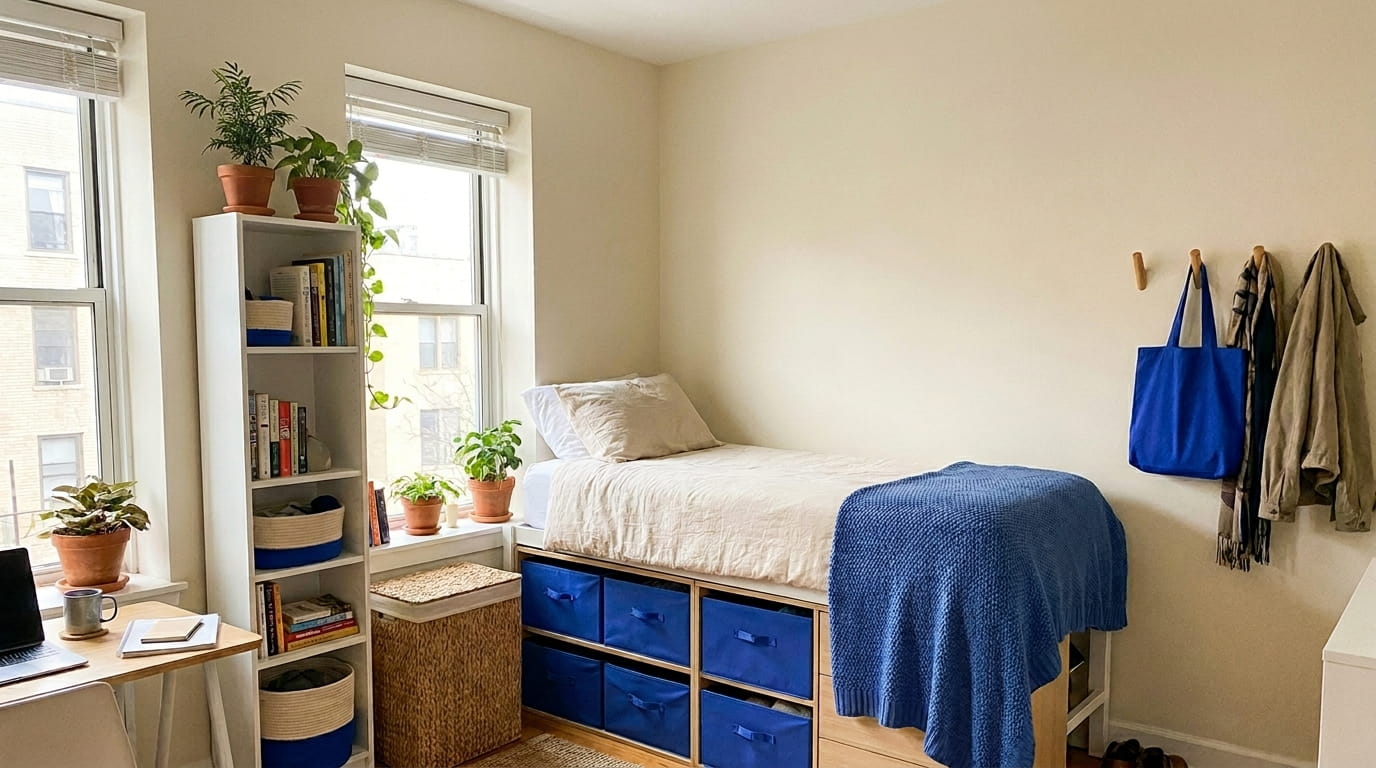
- Under the bed. Low clamshell bins turn the dead air under a bed frame into off-season storage; furniture risers add four extra inches of bin clearance for about ten dollars.
- The back of every door. Over-door hooks and a hanging shoe organizer absorb scarves, cleaning sprays, and actual shoes without a single screw.
- The gap beside the fridge. A rolling cart five or six inches wide slides into the gap and holds spices, oils, and bottles — one of the highest-value purchases per square inch in a tight kitchen.
- Inside cabinet doors. Adhesive caddies on the inside of the sink cabinet keep sponges and brushes off the counter.
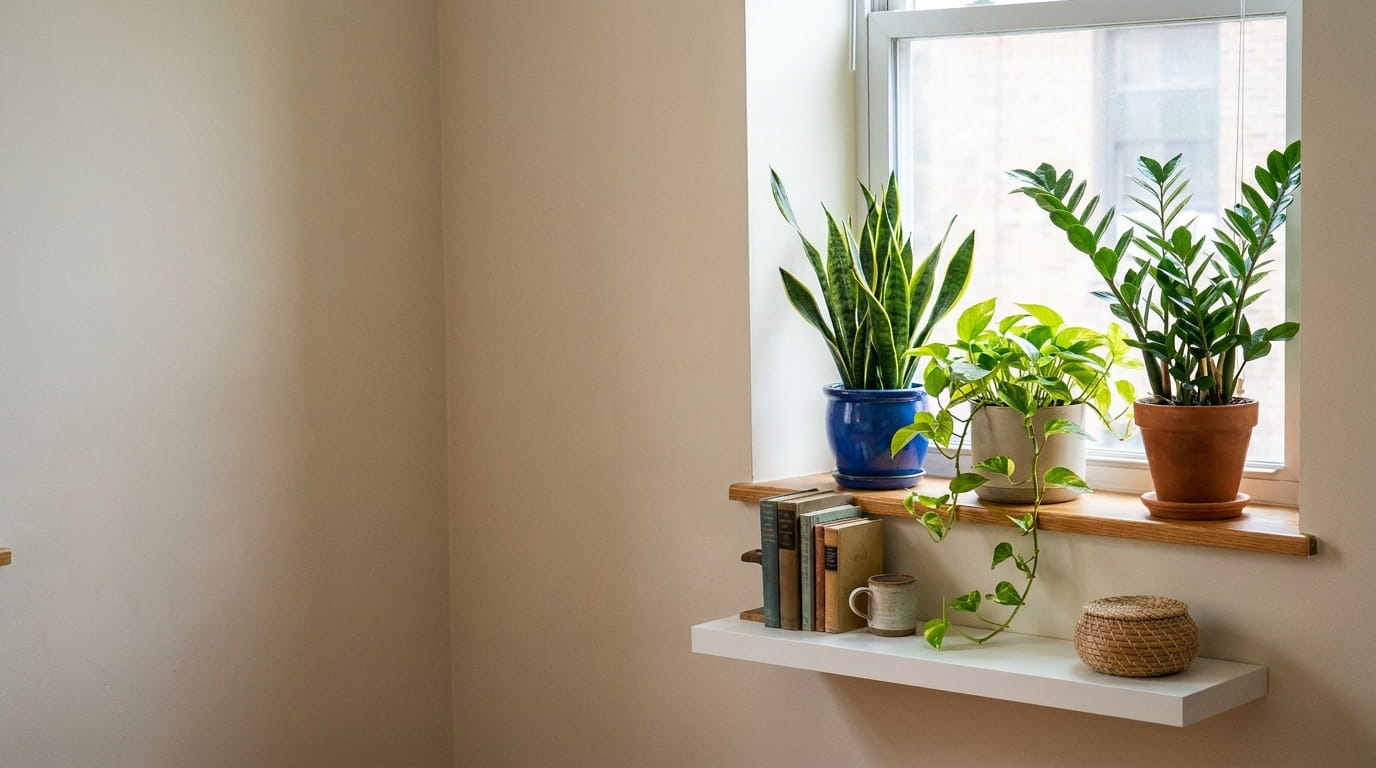
- The top of the cabinets and the strip above the sofa. Baskets for twice-a-year items up top; one long, high shelf for books and plants over the seating.
The closet itself usually hides a second layer of dead space: a hanging rod doubler instantly twins the capacity for shirts and jackets, shelf risers split one tall shelf into two usable ones, and the floor under short hanging clothes takes a row of bins. The principle is the same everywhere: stop scanning the room at standing eye level and look up, down, and into the corners no furniture claims. If the inside of the fridge is its own battlefield, that is a separate project with its own payoff — see our guide to organizing a fridge to waste less food.
Furniture that does two jobs
In a small space, any piece of furniture that only does one thing is on probation. The proven double-duty performers: a storage ottoman instead of a coffee table, which swallows blankets and board games; a bed frame with drawers in the base, or under-bed bins doing the same job for less; a hinged-lid bench by the door that stores shoes and gives you a place to sit while putting them on; nesting tables that tuck into one footprint until guests arrive.
A fold-down wall desk — a hinged panel that latches flat against the wall — gives you a workspace that disappears when you need the floor. None of these require custom millwork; the cheapest versions of each have been apartment staples for decades because the concept, not the brand, is what works. Audit your existing furniture by what it stores, and a surprising amount of it fails the interview.
In a tiny home, if a thing only does one job, it had better be doing it perfectly.
The purchases that disappoint
Some small-space products test well in photos and badly in real life. Vacuum-seal storage bags top the list: the seals slowly leak, the bags re-inflate, and within a couple of months you have crumpled sweaters in a sad balloon. They earn their keep only for deep storage you will not open all season. Tension-rod closet shelving sags under real-world weight and tends to let go without warning. Thin stacking plastic drawer towers crack at the corners. And decorative round baskets waste the very space they claim to organize — circles leave triangular gaps, and soft sides collapse. Square, rigid, stackable bins hold more in the same footprint, and clear ones spare you the mystery-box problem entirely. If you do buy opaque bins, label them; memory is not a storage system.
The meta-mistake behind most of these purchases is buying storage before measuring. Measure the gap, the shelf depth, the under-bed clearance, and the door swing before anything goes in the cart, and check that bins you plan to stack are actually rated to stack. Organizing products bought on optimism become clutter with a lid — the one category of clutter that cost money twice.
Keeping the clutter from creeping back
Storage only works if the volume of stuff stops growing, and that is a habit, not a product. The one-in-one-out rule — a new pair of shoes means an old pair leaves — caps the total at whatever your space actually fits. A ten-minute weekly reset, returning strays to their assigned spots, keeps small messes from compounding into a weekend project.
Keep a donation bag open in the closet at all times so unloved items have somewhere to go the moment you notice them. Most Goodwill locations accept clothing, kitchenware, electronics, and small furniture, and many will pick up larger pieces — though policies vary by region, so check yours before hauling a dresser across town. A full bag leaving monthly offsets a remarkable amount of incoming stuff. The deeper question of what to let go of, and how to do it without second-guessing yourself, is its own skill; we cover it in decluttering without the regret. A small home punishes hoarding faster than a big one, which is honestly part of the cure: go vertical, mine the dead zones, refuse single-purpose furniture, and let the constraint do the rest of the teaching.
Sources & further reading
- Anchor It! — Prevent furniture tip-overs — U.S. Consumer Product Safety Commission
- Tip-Over Information Center — U.S. Consumer Product Safety Commission
- Donate Stuff — Goodwill Industries International