 Expertspost
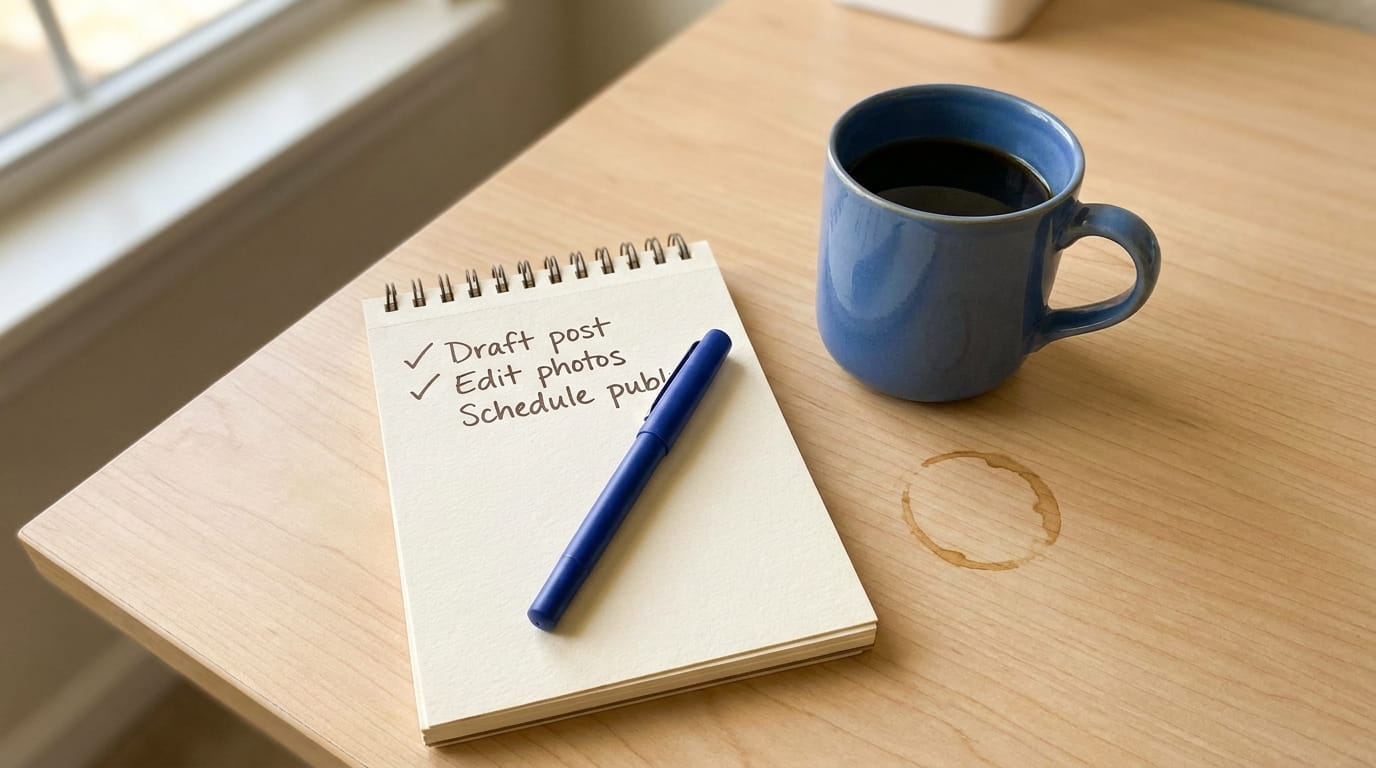
I have started, and killed, an embarrassing number of to-do lists. Paper ones, app ones, a brief and shameful spreadsheet phase. Each one followed the same arc: a burst of optimistic enthusiasm, a few productive days, then a slow accumulation of dread until I couldn't bear to look at it, at which point I'd abandon it and eventually start a shiny new one. The list was never the problem. My relationship with it was.
Eventually I stopped blaming the tools and looked at why every list rotted the same way. The reasons turned out to be consistent and fixable. Here's what was going wrong, and what finally made a list I actually keep using.
The graveyard of dead lists
When I looked honestly at my failed lists, they all died of the same three diseases.
First, they became too long to face. Every list eventually swelled to forty-plus items, most of them old, some of them dating back to a different season of my life. Opening it felt like opening a closet stuffed past the point of closing. So I stopped opening it.
Second, the items were vague. "Website," said one entry, helpfully. What about the website? I'd written it knowing what I meant and then forgotten by the time I looked again, so it just sat there radiating guilt instead of getting done.
Third, there was no daily relationship with the list. I'd consult it sporadically, in a panic, rather than as a regular habit, so it drifted further and further from reality until it was pure fiction.
Tasks that name the next physical step
The biggest fix was changing how I write each task. A task isn't a topic, it's an action, and it should name the very next physical thing I'd do.
"Website" is a topic. "Email the designer about the homepage draft" is an action. The second one I can actually start, because there's no thinking left to do, just doing. Every time I write a task that requires me to first figure out what the task even is, I've planted a future moment of friction. This is the same insight that helped me with procrastination: a clear, small next step is one I'll actually take.
My rough rules for writing a task:
- Start with a verb. Call, email, write, buy, draft, schedule.
- Make it concrete enough that a tired version of me could start it without thinking.
- If it's actually a project with several steps, write only the very next step as a task and keep the project itself somewhere separate.
A shortlist for today
The other crucial change was separating "everything I might ever do" from "what I'm doing today." Mixing those is what makes a list unbearable.
So each morning, or the night before, I pull a short list of the things I'll actually attempt today. Three to five items. Not ten, not twenty. A number small enough that finishing it is realistic, because a list you can finish gives you a clean win, and a list you can never finish just teaches you that lists are a source of failure.
A to-do list you can actually finish teaches you to trust it; one you never finish teaches you to ignore it.
Some days I get through the shortlist and pull a couple more items, which feels great. Most days I finish it and stop, satisfied. The shortlist is where the real work happens. The big master list is just a holding pen, and I've learned not to confront the whole thing at once.
A home for everything else
All the stuff that isn't for today still needs somewhere to live, or my brain keeps trying to hold it, which is exhausting and unreliable. So I keep a separate, longer list for everything else, and I do not look at it during the day.
I split that holding area loosely into two buckets. One is for tasks I'll get to soon, the next week or two, that just aren't today. The other is a "someday/maybe" pile for ideas and intentions with no real deadline: things I might want to do eventually, books to read, projects to consider. The someday pile is allowed to be huge and messy because I'm not pretending I'll do all of it. It's a parking lot, not a promise.
The point of getting it all out of my head and into a trusted place is that I can stop mentally rehearsing my obligations. If it's written down somewhere I'll see it at the right time, I'm free to forget it for now. That freedom is most of the value of a list, and it only works if I actually trust the list to catch things, which brings me to the last part.
The habit that holds it together
None of this survives without one habit: regularly tending the list so it stays trustworthy. A list you don't maintain becomes fiction within days, and a fictional list is one you rightly stop believing.
Two touchpoints keep mine honest. Each morning I build the shortlist for the day, which forces me to glance at what's pending. And once a week I do a proper sweep of the whole thing during my weekly review: crossing off what's done, deleting what no longer matters, and rewriting anything that's gone vague. That weekly clean-out is what stops my list from sliding into the bloated graveyard state that killed all its predecessors.
I won't claim it's perfect. The list still drifts when I get busy, and I've had to do a full reset more than once. But the resets are rarer now, and recovery is quick, because the bones of the system are sound: clear actions, a short daily list, a trusted holding pen, and a regular tidy. It's not clever. After all those dead lists, I've decided I prefer reliable to clever every time.