 Expertspost
Most slow drains are not a chemistry problem. They are a physical wad of hair or grease, and the right answer is to physically remove it — which costs a few dollars in tools that last forever, instead of a bottle of caustic gel that is genuinely hazardous to keep under the sink. Here is the escalation order that clears the everyday clog.
Why skip the chemical stuff
Chemical drain openers work by being corrosive. The National Capital Poison Center notes that the common formulas are built on sodium or potassium hydroxide (lye) or strong acids, and that splash-back injuries happen exactly the way you would guess — product poured from too high, or into a fully blocked drain that sends it back up. Skin contact causes chemical burns; MedlinePlus lists eye burns with permanent vision loss among the documented injuries from lye-based drain openers.
The failure mode is worse than the hazard: if the bottle does not clear the clog, you now have a pipe full of caustic liquid sitting on the blockage, which makes every next step — plunging, opening the trap, even a plumber's visit — more dangerous. Heat-generating formulas are also hard on older pipes. Mechanical methods carry none of this baggage, which is why they come first, not last.
The order to try things
- Pull the stopper and look. In bathroom sinks, the pop-up stopper catches a startling amount of hair right at the top. Half of all bathroom clogs end here, in two minutes, by hand.
- Hot water, for kitchen grease. A kettle poured slowly in stages can re-melt and flush a greasy kitchen drain. With PVC pipes, use very hot tap water rather than a rolling boil, which can soften plastic joints over time.
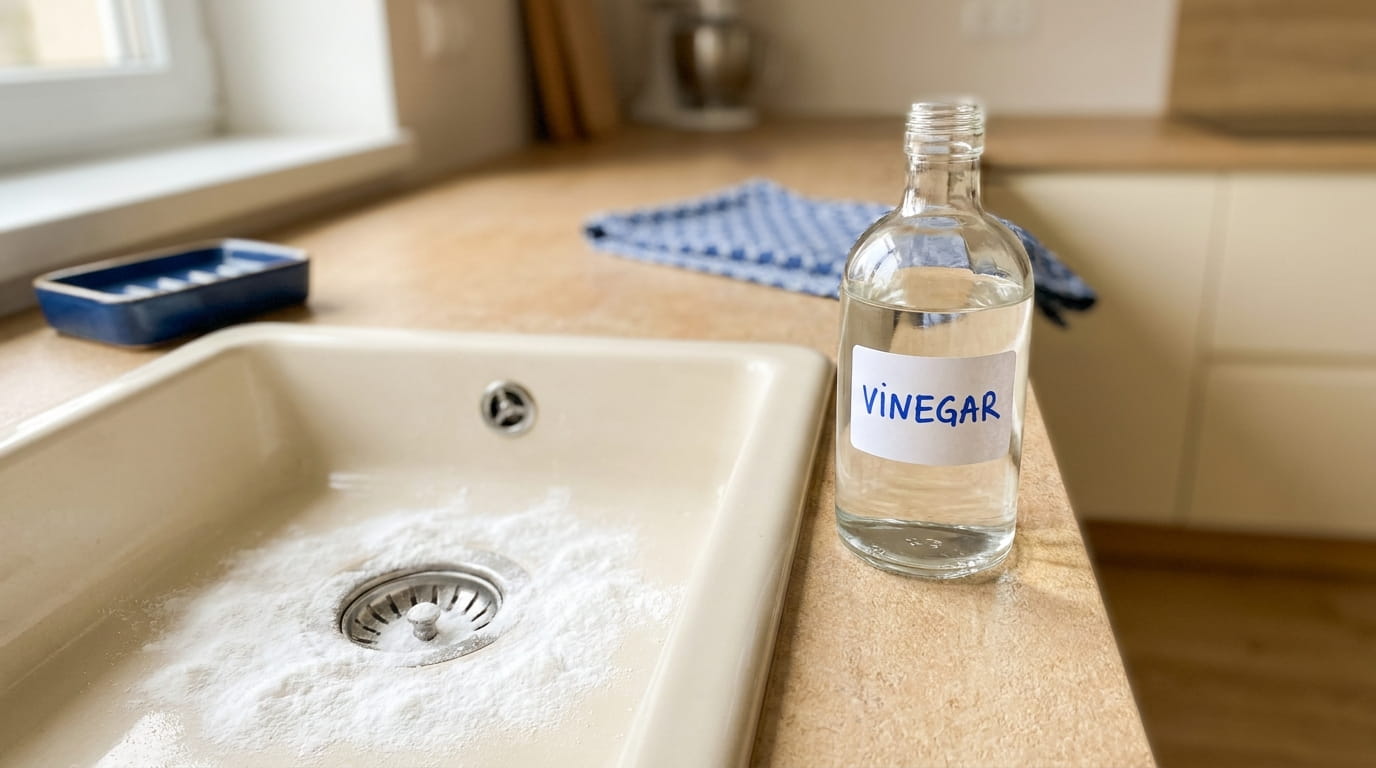
- Baking soda and vinegar, with low expectations. The fizz helps odors and light film more than real clogs, but it is harmless and occasionally enough.
- Plunge. A small sink plunger works only if you block the overflow hole with a wet rag first — otherwise you are pumping air, not water.
One firm warning: if a chemical cleaner has already gone down and failed, do not plunge and do not open the trap until the pipe has been flushed with plenty of water. Splashing standing lye at your own face is the canonical drain-cleaner injury, and it is entirely avoidable by starting mechanical instead.
The tools that actually work
The hero of bathroom drains is the plastic barbed strip — a few dollars for a pack — which slides past the stopper, twists, and pulls up the hair wad whole. It is the grossest two minutes in home maintenance and the most satisfying. For deeper or tougher clogs, a hand-crank drum auger reaches several feet down the line: feed until you hit resistance, crank to hook or break the blockage, pull back, and run water to confirm flow.
The third option is the P-trap itself, the U-shaped pipe under the sink. Put a bucket underneath, unscrew the two slip nuts by hand, and empty out whatever decade of sludge — or dropped ring — has settled in the bend. It reassembles in five minutes and needs no tools on most modern plastic traps. Garbage disposals add one wrinkle to the kitchen picture: they chop food but do nothing about grease, and coffee grounds, eggshells, fibrous vegetables, and starches that swell — rice, pasta — are notorious for building a plug just past the unit. Run cold water during grinding and for a few seconds after, and keep the worst offenders in the trash.
Most slow drains are a physical wad of hair, not a chemistry problem.
Prevention, and when to call a pro
Two habits prevent most clogs outright. First, mesh strainers over every drain, a couple of dollars each, catch hair and food scraps before they enter the pipe. Second, keep grease out of the kitchen drain entirely: Clemson University's Home & Garden Information Center, citing EPA data, reports that grease is the most common cause of reported sewer blockages — 47 percent — because it goes down warm and liquid, then cools and hardens in the pipe like wax. Pour cooled fats into a can for the trash, and wipe greasy pans with a paper towel before washing. A monthly flush of very hot water with a squirt of dish soap keeps the kitchen line moving — the same small-maintenance logic that keeps a mattress from ever needing a heroic rescue.
Know the limits of DIY, though. Multiple drains backing up at once, gurgling toilets, or sewage smells point to a main-line problem no barbed strip will touch. The same goes for a single drain that re-clogs within days of being snaked — something structural is wrong, and that is a plumber's call, possibly a camera inspection for roots in the sewer line. Mechanical fixes own the everyday slow drain, which is most of them; they are not a substitute for a professional when the symptoms point deeper.
Frequently asked questions
Does baking soda and vinegar actually unclog drains?
Mostly no. The fizz is carbon dioxide, which freshens odors and can loosen light film, but it does not dissolve a physical wad of hair or hardened grease. It is harmless and worth trying on a mildly sluggish drain, but a genuinely clogged one needs mechanical removal — a barbed strip, a snake, or opening the P-trap.
Is it safe to pour boiling water down a drain?
Down metal pipes, yes. With PVC plumbing, repeated boiling water can soften joints, so use very hot tap water instead. Boiling water helps mainly with kitchen grease, which it re-melts and flushes; it does little for bathroom hair clogs. Never pour boiling water into a sink that already holds standing chemical drain cleaner.
Can you plunge a drain after using chemical drain cleaner?
Do not. If a caustic cleaner failed to clear the clog, the pipe is now holding lye or acid, and plunging can splash it onto your skin and eyes — a scenario poison-control centers specifically warn about. Flush with large amounts of water and wait before any mechanical work, and wear eye protection if you must open the trap.
Sources & further reading
- What's in Drain Cleaner? — National Capital Poison Center
- Drain Opener Poisoning — MedlinePlus, U.S. National Library of Medicine
- F.O.G. (Fats, Oils, and Grease) Pollution — Clemson University Home & Garden Information Center