 Expertspost
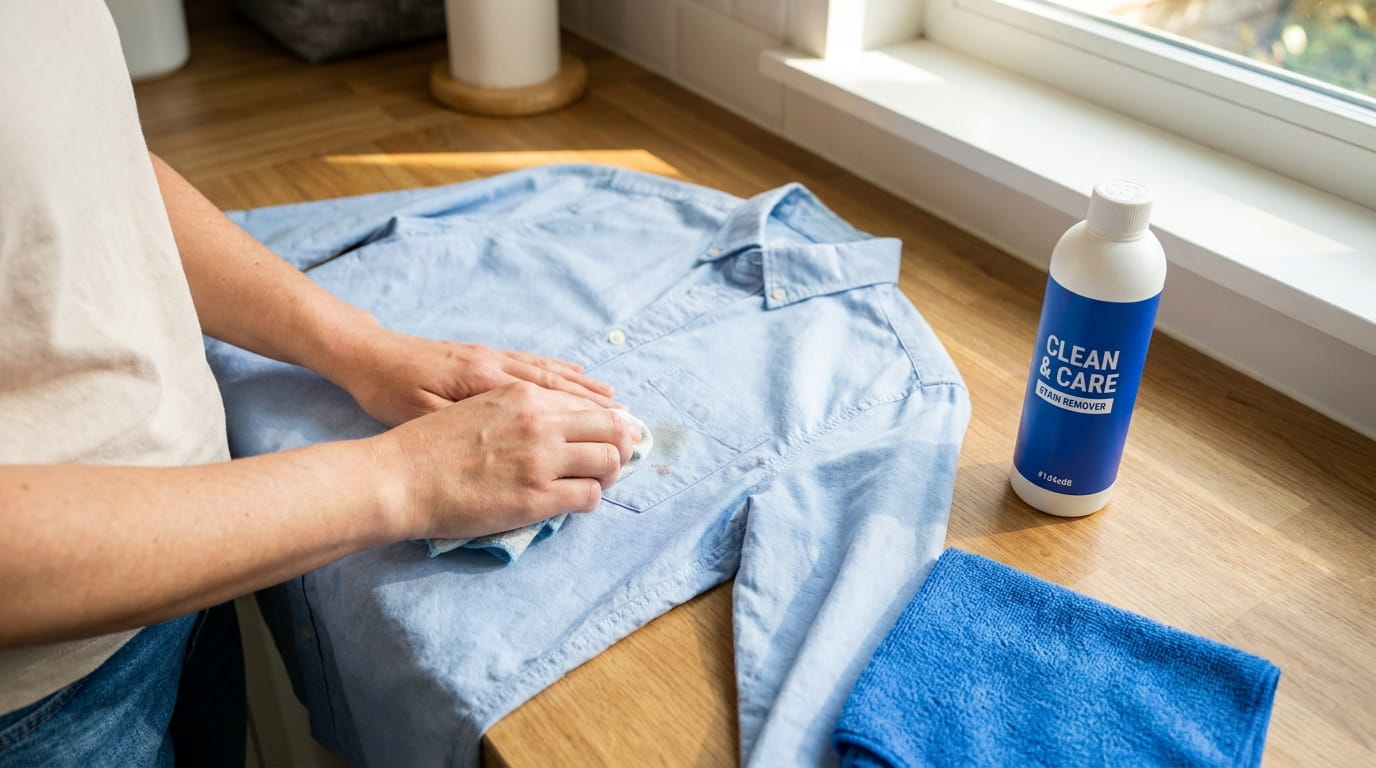
Every stain chart covers forty stains, thirty-eight of which never happen. Real life is coffee, pizza grease, the occasional kitchen-mishap blood spot, wine, and yellowed underarms. This is the short version: the rules that govern all of them, the treatment for each, and a five-item kit that covers nearly everything.
Three rules that apply to everything
- Act fast. The American Cleaning Institute's stain guide leads with the same point every textile chemist makes: the less time a stain soaks in, the easier it comes out. The clock beats the technique.
- Blot, do not rub. Rubbing grinds the stain deeper and spreads it wider. Press a clean cloth down, lift, repeat with a clean section.
- No heat until the stain is gone. Hot water and especially the dryer set many stains permanently. If a wash does not fully lift it, air-dry and treat again — the dryer is what makes a stain forever. Cold-water washing happens to be the cheap option too: the Department of Energy notes that heating the water is most of a load's energy cost and that cold settings clean fine for all but oily soils.
A fourth, quieter rule: test any cleaner on a hidden seam first. Some treatments lighten dye, and discovering that on the front of a shirt converts a small stain into a permanent bleach mark.
The five stains you actually get
| Stain | First move | Then | Never |
|---|---|---|---|
| Coffee, tea | Flush cold water through the back | Work in detergent; oxygen-bleach soak if dried | Hot water first |
| Red wine | Blot; cold water | Oxygen-bleach soak, then wash | Rubbing it in |
| Grease, oil | Cover with cornstarch 15 min, brush off | Dish soap worked in; warmest wash fabric allows | Skipping the powder step |
| Blood | Cold running water from the back | Hydrogen peroxide on set stains (test color first) | Warm or hot water |
| Sweat, deodorant | Baking-soda paste or white vinegar, let sit | Wash; oxygen bleach for older marks | Chlorine bleach (yellows them worse) |
Two details earn their keep. Grease wants the absorbent-powder step before any soap — the cornstarch pulls oil out of the fibers, and the dish soap handles the rest; skip the powder and a shadow remains. And blood is a protein stain: heat cooks it into the fabric, which is why everything happens in cold water. The yellow underarm mark is technically sweat plus antiperspirant aluminum, which is why plain detergent underperforms and a pre-soak does the work.
If the stain survives the wash, air-dry it; the dryer is what makes it permanent.
Carpet and upholstery
You cannot throw a couch in the wash, so the rules tighten: blot up everything first, then use as little liquid as possible, because soaking pushes the stain into the padding and invites mildew underneath — the same wet-is-the-enemy problem as a mattress. A teaspoon of dish soap in a cup of warm water, dabbed on and blotted from the stain's outside edge inward, handles most spills; blot with plain water afterward so leftover soap does not attract dirt. For pet messes, skip the soap and use an enzyme cleaner, which breaks down the stain and odor instead of masking them. Test a hidden patch first, always. And skip the club soda ritual — controlled comparisons keep finding that plain cold water blotted promptly does the same job; the fizz is theater. After any wet treatment, press a dry towel down with real weight to pull moisture out of the pile, then let it air-dry fully before walking on it.
A small stain kit worth keeping
Five cheap items cover almost everything: dish soap (grease), powdered oxygen bleach (coffee, wine, sweat soaks), white vinegar (sweat, odors), hydrogen peroxide (blood and protein stains), and baking soda or cornstarch (absorbing fresh grease, paste scrubs). Add an enzyme cleaner with pets or kids in the house, and a stain pen for catching spills away from home. The whole kit costs less than two ruined shirts, and unlike a shelf of single-purpose sprays, every item in it does double duty elsewhere in the house.
One safety note before you improvise: never combine cleaning products, especially anything containing chlorine bleach with ammonia or acids like vinegar. The Washington State Department of Health warns that those mixtures release chloramine or chlorine gas, which cause breathing problems and chest pain at household concentrations. One product at a time, rinse between.
The real secret is not in the bottles at all: treat the spill as a thirty-second job now rather than a laundry-day project later. And when something is genuinely past saving — set ink, dye transfer, a true bleach spot, which is missing color rather than added stain — retire it with honor as a cleaning rag or a drop cloth for your next paint job. Most stains you actually get come out, if you catch them fast and keep them away from the dryer.
Sources & further reading
- Stain Removal Guide — American Cleaning Institute
- Dangers of Mixing Bleach with Cleaners — Washington State Department of Health
- Laundry — Energy Saver — U.S. Department of Energy